Thanks to Personal Health Pathways recommending a routine mammogram to Estelle (68), caught breast cancer as early as possible - at stage 1
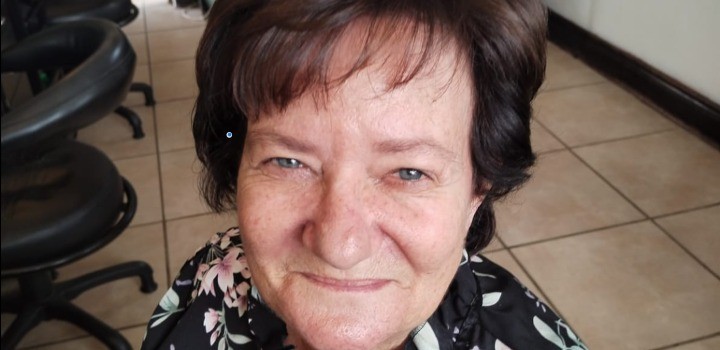
"Without Personal Health Pathways, I likely wouldn't have had a mammogram when I did, and my breast cancer would have progressed undetected," says Estelle Stoltz (68). Working in healthcare, Estelle knows that often people postpone necessary routine health checks - something she did too, until Personal Health Pathways got her back on track.
Estelle Stoltz works as a practice manager for a doctor based in Amanzimtoti, just south of Durban in KwaZulu-Natal. In late 2025, Discovery Health Medical Scheme (DHMS - of which she's also a member) ran an awareness drive involving practice managers like Estelle. The idea was to educate them on how Personal Health Pathways works, so they could talk to DHMS member patients who came for doctors' appointments about activating and using their Personal Health Pathways. Estelle soon understood the benefits for herself and activated her own Pathway.
"My first health action through Personal Health Pathways was to go for a mammogram."
"I hadn't been for a mammogram for about 13 years," admits Estelle. "So, I agreed it was time to go for one - the recommendation made sense." She decided to book an appointment right away. To her surprise, the results showed concerning abnormalities.
"On my right breast, there was a small mass." Under her arm, the results also showed abnormalities in several lymph nodes. "So, a needle biopsy procedure was scheduled for me," she adds.
The results of the biopsy confirmed that Estelle had early-stage breast cancer. "I wasn't too happy when I heard the news," she says. Estelle did, however, feel encouraged that the recommended mammogram led to a stage one diagnosis.
- - What does Stage 1 breast cancer mean? The cancer was found very early. The tumour is still small and has not spread beyond the breast or has only spread to a very small number of nearby lymph nodes. At this stage, the cancer is usually easier to treat, and outcomes are generally very good.
Estelle's treatment journey begins shortly after her breast cancer is diagnosed
"I had to see an oncologist, who then referred me to a specialist surgeon." The oncologist also assisted with getting her registered for the Discovery Health Medical Scheme's Oncology Programme before her surgery. Access to the cover and support offered turned out to be a big help in covering all her treatment costs.
Estelle's treatment plan started with surgery to remove the cancerous tissue from her breast. "The surgeon explained that he would take out the mass and as much tissue around it as possible during the operation."
Estelle then went for a series of tests, followed by the scheduled surgery. The surgeon was able to successfully remove the mass from her breast. He also took out five lymph nodes for review. "Luckily, there was no cancer in the lymph nodes," shares Estelle.
After surgery and a brief recovery period, Estelle was referred to the oncologist. Tests done showed she needed radiation treatment. Estelle was then booked in for 20 sessions.
Estelle experiences treatment-related side effects
"I had to go for radiation treatment the whole month of October 2025 - Monday to Friday," she says. "The sessions were only for about 10 seconds every day. In between, I had to see the oncologist for check-ups."
Estelle experienced side effects from her month-long treatment. "Your skin can get quite burned. But the oncologist gave me a cream to put on to help with that." Estelle also experienced fatigue as a side effect of treatment. And her right breast remained a little tender to the touch. "After about two weeks, I was sick for just one day. I was very dizzy and felt unwell."
On the upside, Estelle didn't lose her appetite and was able to eat well enough to keep strong throughout treatment. Once the radiation therapy was completed, the oncologist recommended that Estelle start taking hormone blockers to control the levels of oestrogen in her body. "I have to take these hormone blockers for the next five years." Taking them puts her at risk of developing osteoporosis, so she also takes supplements to help with that and makes sure to exercise daily.
Estelle was relieved that she didn't require any further treatment through November and December 2025. "I'm very thankful I haven't needed chemotherapy too."
She is due for another check-up and series of screenings and tests towards the end of February 2026.
Personal Health Pathways continues to guide Estelle's health journey
"I walk three kilometres a day, so I am getting in some exercise," she explains. While Personal Health Pathways does give her a weekly exercise goal, Estelle has been more focused on achieving the health recommendations she's been receiving through her Pathways. Now that her first round of treatment is complete, she is more motivated to learn the full functionality of Personal Health Pathways and experience all the benefits. She's had two more health actions recommended to her, and again they make perfect sense for her age and health status - going for a bone density test and a dental check-up.
Acting on her mammogram earned Estelle R500 in her Personal Health Fund which she'll be able to use to pay for day-to-day medical expenses.
"Without Personal Health Pathways, I likely wouldn't have had a mammogram yet..."
"I'm very thankful that we picked up the cancer so early. Personal Health Pathways not only helped me understand that I needed this check-up but also sent me reminders along the way." This helped ensure that she got her mammogram done by the deadline set (each health action comes with a date by which to complete it).
Working in a healthcare context, Estelle sees all too often how people postpone necessary routine health checks, and she did the same thing before Personal Health Pathways got her on track again - a track she plans to stay on. She believes there is no doubt that the earlier you pick up that something's wrong, the higher your chances of better treatment outcomes and the lower the impact on your life and wellbeing.
What is Personal Health Pathways?
Personal Health Pathways is a free tool available to adult DHMS members via the Discovery Health app. It provides personalised, real-time health recommendations based on each member's unique profile. As a member's health journey evolves, so does their pathway, continuously updating based on their specific health status, risk profile and engagement patterns and dynamically adjusting as new health data become available.
Personal Health Pathways combines artificial intelligence, predictive analytics and behavioural science. The platform uses more than 50 million life years of health claims and clinical data, along with nearly 30 million life years of exercise and lifestyle data gathered through Vitality in South Africa, to recommend actions that have the greatest potential to improve health outcomes.
Each Personal Health Pathways cycle provides up to two clinical actions and one weekly exercise goal, which must be completed by a set date. Members can earn up to R500 into a new Personal Health Fund for each completed action, up to a maximum of R10,000. The money that is accumulated in the Personal Health Fund can be used for day-to-day medical expenses, including GP and specialist consultations, medicine, radiology and pathology.
Members earn rewards (through Discovery Health) for engaging, including shopping vouchers, Ðiscovery Miles and instant rewards. Those Scheme members who are also Vitality members earn personalised rewards through Personal Health Pathways in addition to their Vitality rewards.