Gerhard Liebenberg, 53 - Eastern Cape
3 min read
Living with Type 1 diabetes: Diagnosed at 18, thriving at 53 with Discovery Health Medical Scheme's support
Gerhard Liebenberg, 53, lives in the Eastern Cape, works full-time, and still manages to walk 10,000 steps daily. He has lived with Type 1 diabetes since he was 18. This is the story of how this Discovery Health Medical Scheme member started listening to his body and took control of both his diabetes and his overall wellbeing.
Today, 53-year-old Gerhard Liebenburg is in the best shape of his life. He walks 10,000 steps every day, even on workdays spent mostly in front of a laptop. He eats carefully - the right amounts of protein, healthy fats and vegetables, and is very careful about his carbohydrate and sugar intake.
- - When it comes to carbohydrates, complex carbohydrates with a low glycemic index (GI) and high fiber content are the healthiest choices for people living with diabetes. These carbs break down slowly, providing a steady release of energy without causing rapid spikes in blood sugar levels.
- - The healthiest complex carbohydrates for diabetics include whole grains like steel-cut oats, quinoa, brown rice, barley, and bulgur; legumes such as lentils, chickpeas, black beans, and kidney beans; non-starchy vegetables including spinach, kale, broccoli, cauliflower, asparagus, and zucchini; and low-sugar, high-fiber fruits like raspberries, blueberries, strawberries, apples, and pears.
Gerhard tracks his blood glucose in real time using a continuous glucose monitor (CGM) - a patch applied to his upper arm that delivers blood sugar readings on-demand to an app on his phone. He is also on a GLP-1 receptor agonist medicine, which has been part of a recent addition to how he manages his condition.
- - Discovery Health Medical Scheme members registered on the Chronic Illness Benefit for type 1 diabetes may qualify for CGM sensor cover when the sensors are prescribed by a doctor within the Discovery Health network.
- - For members on all Discovery Health Medical Scheme plan types (excluding the KeyCare Series) who are registered for type 2 Diabetes, GLP-1 receptor agonists are funded from the Chronic Illness Benefit when the Scheme's clinical criteria for these medicines are met. If not met, these medicines are funded from the member's available day-to-day benefits (a member's Medical Savings Account)
After years of picking up weight and not properly managing his diabetes, this data scientist decided in his early fifties to put the same rigour he applies at work to his own body. He started collecting hundreds of finger-prick readings and plotting trends around how different foods affected his blood sugar and shared these with his diabetes-specialist GP. Then he graduated to using a CGM and logging everything on the linked tracking app to see even more deeply into these patterns. Access to this information rewired his understanding of what it means to live well with type 1 diabetes. But getting here meant confronting a family history that had shadowed him since childhood.
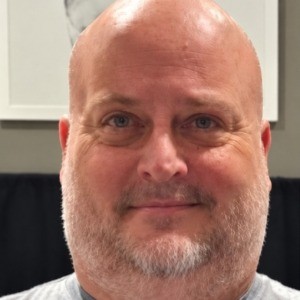
Before
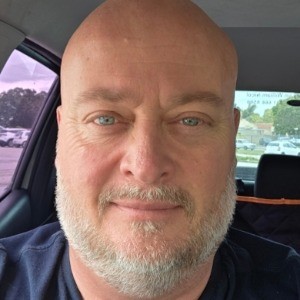
After
Your family history was shaped by chronic disease - especially diabetes?
My mother had type 1 diabetes. She was diagnosed when she was very young, in 1977 when she was 26. In those days, the understanding of the disease, treatment, and supporting technology were just different - lacking, really. It was a case of "inject yourself with insulin once a day and hope for the best". The disease affected her blood vessels, her heart, everything. By 1984, she spent three months in the ICU due to the complications of the condition. She passed away in 2012 when I was 38 years old.
My father had type 2 diabetes and passed away due to a heart attack at the age of 59 - again caused by diabetes.
I grew up watching what happens when a condition like this is not well managed or understood. You carry that with you - the knowledge of that risk, whether you yourself develop diabetes or not.
When you have seen what diabetes can do to someone you love, you do not forget it. It shapes how you think about your own body, your own future. I knew from a young age that this ran in my family, that it was real, that it was serious.
You were 18 when you were diagnosed with diabetes. How did that affect you??
Yes, with type 1 diabetes - the same condition that my mother died from. I understood the condition because I had grown up around it, but understanding something and having to do engage in it for yourself are completely different things. I had to learn to manage my insulin, my eating, my activity, everything. It was a lot to take on at that age.
You spent years not managing the condition and picked up a lot of weight?
For years I lived quite randomly. I took my insulin but I was not careful about what I ate or how active I was. My body reacted. I picked up a lot of weight, going from about 90kg to about 150kg. I could not walk more than a few steps without losing my breath. Even a trip to the shops was a nightmare for me. I'd send one of my sons in to buy what we needed and wait in the car.
Then I turned 52 and something shifted. I realised I was very close to the age my father was when he passed away (at 59). That hit me hard. I looked at myself, and I thought 'I cannot keep going like this'. That was the moment everything changed. I decided I had to understand what was happening inside my own body, not just guess at it. I had to face it properly or I was going to go the same way as my dad, and mom.
You went from barely tracking your condition to tracking every possible data point. What did all that data teach you about your own body?
I started with finger pricks. Hundreds of them. I wanted to see the patterns and understand how different foods and activities affected my blood sugar. Eventually I got a continuous glucose monitor - partially funded through my Discovery Health Medical Scheme plan - and that changed everything. I could see my glucose levels anytime, in real time. I started tracking everything on the linked app, logging what I ate, exercise, how my body responded.
I began to lose weight and over time reduced the amount of insulin I needed to manage the condition - a result of better eating, exercise, and a better understanding of how to manage the condition.
I recently also began to take GLP-1 receptor agonist medicine, which has continued to support my transformation. It lowers my appetite and has also supported steady blood sugar levels, allowing me to lose another 15 kg or so.
At the end of the day the key is to really, deeply understand yourself and your body. My efforts to gather my data taught me that every person who lives with diabetes is different. What affects one person does not affect another in the same way. You must be willing to get into your own numbers and figure out what works for you, ideally with the support of a GP who specialises in diabetes care, as mine does.
The support behind the transformation - and the Scheme that made it possible
Managing diabetes can feel lonely. I have been so grateful for the access to support I get through the Discovery Health Medical Scheme's Diabetes Care Programme. I have access to a multidisciplinary team that would have been unimaginable in my mother's time. My GP, a doctor known for his expertise in diabetes, is on the Discovery network, which means I can access a partially funded continuous glucose sensor through my Classic Comprehensive plan.
Beyond my GP, I see a nurse educator for diabetes guidance, have my retinas tested annually at Specsavers to guard against diabetes-related eye damage, and visit a podiatrist to monitor the blood circulation in my feet - the furthest point from the heart, and the most vulnerable to poor blood flow.
Then, Personal Health Pathways keeps me accountable in a way I value deeply, prompting me to schedule my HbA1c tests, check my blood pressure and cholesterol, and stay on top of age-appropriate screenings.
Discovery created a support structure that a person like my mum never had - and for that, I am profoundly grateful to the Scheme.
What are you hoping for going forward?
As for the future, I want to keep going the way I am now - eating healthily, exercising, and being able to say yes to all that life brings. We moved from Gauteng to the Eastern Cape for a better lifestyle, and it was the right choice as I am more active now. I have two sons and I want to be here for them and for my wife, who is my greatest support. All this is what drives me.
Understanding type 1 and type 2 diabetes
- - Type 1 diabetes is an autoimmune condition where the body's immune system attacks and destroys the insulin-producing cells in the pancreas. Without insulin, the body cannot regulate blood sugar levels, leading to dangerously high or low glucose. Unlike Type 2 diabetes, which is often linked to lifestyle factors, Type 1 is not caused by diet or weight and cannot be prevented. It is typically diagnosed in childhood or early adulthood. Management requires lifelong insulin therapy, regular blood glucose monitoring, and careful attention to diet and exercise. Over time, poorly managed diabetes can lead to serious complications affecting the heart, blood vessels, kidneys, eyes, and nerves.
- - Type 2 diabetes is a chronic metabolic condition where the body cannot use insulin properly or cannot make e enough of it, a process driven by genetics and key lifestyle factors like physical inactivity, poor diet, excess body fat, lack of sleep, and chronic stress; this differs from Type 1 diabetes, which is a rapid-onset autoimmune disease where the immune system destroys the pancreas's ability to produce any insulin at all, requiring lifelong daily insulin therapy for survival.
- - Through the support of managed care programmes such as the Diabetes Care Programme, healthcare technologies such as Personal Health Pathways, alongside consistent care from a Primary Care Professional (GP or other) and technologies like continuous glucose monitors and personalised medicines, people with type 1 and type 2 diabetes can live full, healthy, active lives.
Gerhard's cover
| Discovery Health Medical Scheme member | Gerhard Liebenberg |
|---|---|
| Age | 53 |
| Location | Eastern Cape |
| Diagnosis | Type 1 diabetes |
| Support through Discovery Health Medical Scheme | Diabetes Care programme, Personal Health Pathways, Vitality, continuous glucose monitoring, GLP-1 receptor agonist medication |
| In Gerhard's own words | "Being a Discovery Health Medical Scheme member has given me the tools and the support to take control of my diabetes instead of letting it control me. The Diabetes Care programme and the data I can access through it have changed how I live every single day." |
| Where are they now? | Managing Type 1 diabetes with GLP-1 medication, continuous glucose monitoring, daily walks, and healthy eating. |
| How Discovery Health Medical Scheme supports members like Gerhard |
Discovery Health Medical Scheme offers a Diabetes Care Programme that partners members with their nominated Premier Plus GP and a multidisciplinary team - including a nurse educator, dietitian, biokineticist, podiatrist, and ophthalmologist - for fully covered, holistic, clinically sound care. Personal Health Pathways adds another layer of support, prompting members to schedule their HbA1c tests, check their blood pressure and cholesterol, and stay on top of age-appropriate screenings. The Personal Health Fund helps stretch day-to-day benefits further, helping members to fund their everyday diabetes-related expenses through engagement in Personal Health Pathways. |
| How Diabetes affects Discovery Health Medical Scheme members | According to the HealthTrend26 Report by Discovery Health, More than half of Discovery Health Medical Scheme members live with multiple conditions in 2026, and those managing three or more have more than doubled. Cardiovascular disease, mental health conditions, diabetes and cancer dominate chronic care demand, together accounting for 84% of total chronic spend. |
All medical information found on this website, including content, graphics, and images, is for educational and informational objectives only. Discovery Health publishes this content to help and to empower patients and their families. The views expressed by all the contributing healthcare providers are their independent, professional medical opinions, aimed at supporting patients. These views do not necessarily constitute the views of Discovery Health.
Discovery Health Medical Scheme is an independent non-profit entity governed by the Medical Schemes Act, and regulated by the Council for Medical Schemes. It is administered by a separate company, Discovery Health (Pty) Ltd, an authorised financial services provider. Discovery Health (Pty) Ltd, registration number 1997/013480/07, an authorised financial services provider and administrator of medical schemes.